What a Croissant Taught Me About Home
LEARN MORE
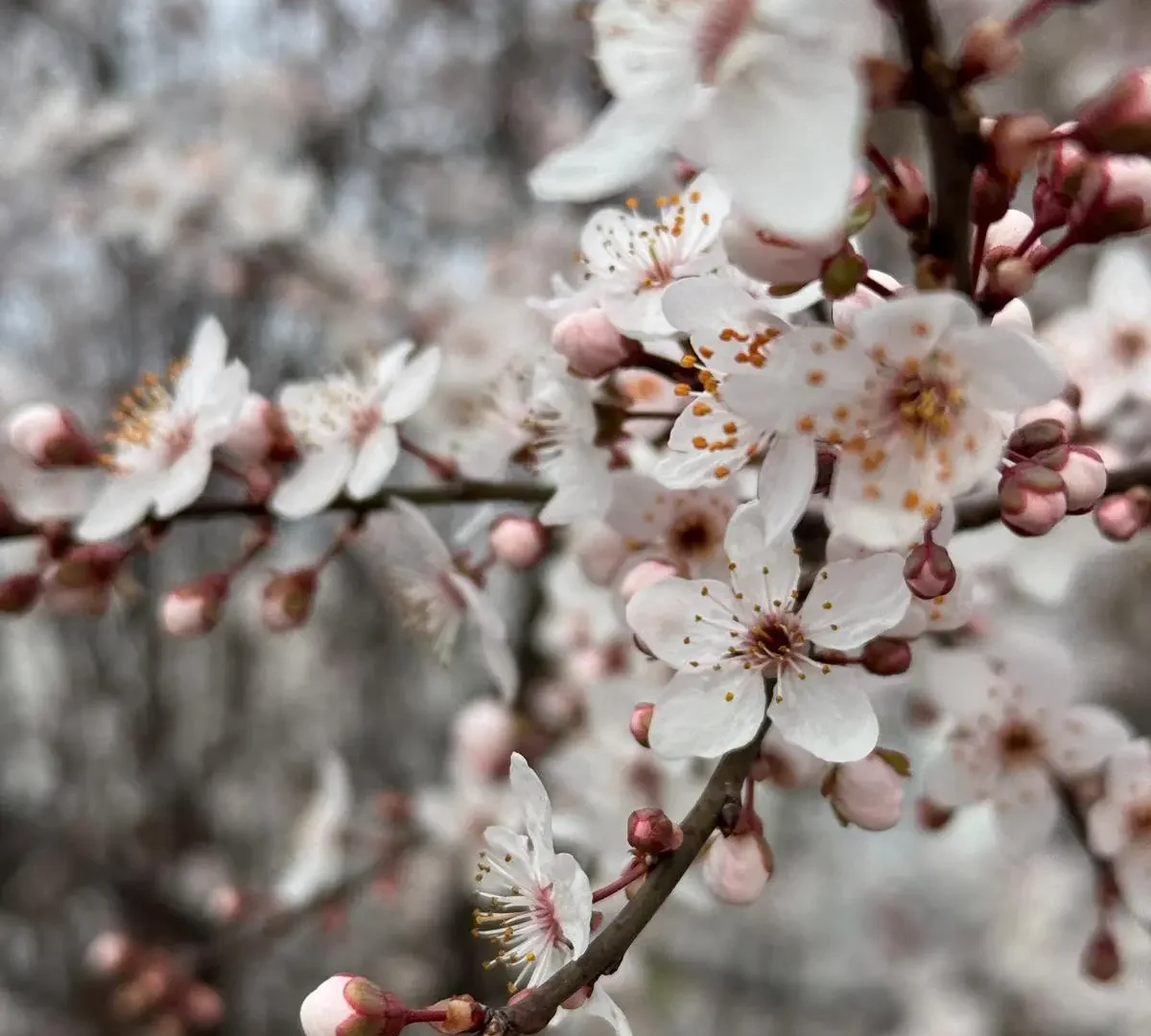
The new season brings not only renewal, but also things that are completely new.
When I think back over the sixty transitions from winter to spring that I’ve so far experienced in my life, I remember a gradual reawakening. I remember becoming faintly aware that the days were getting a little longer, seeing the first little purple buds at branch ends that after a few weeks would gradually unfold into leaves or flowers, and inhaling the loamy scent of rich earth slowly thawing back to life. Not this year. A week ago Friday, I walked past a dormant cherry tree, its branches winter bare. But when I walked past the same tree on the following Monday, it was a riot of pink and white blooms. Likewise the magnolia tree in the piazza in front of the Poggibonsi-San Gimignano train station; one day it was dormant, and seemingly the next it was filled with exuberant flowers. Like its coiled metal namesake, spring this year has burst forth with what seems to have been an intense pent-up energy.
Closing for Winter, Preparing for Spring
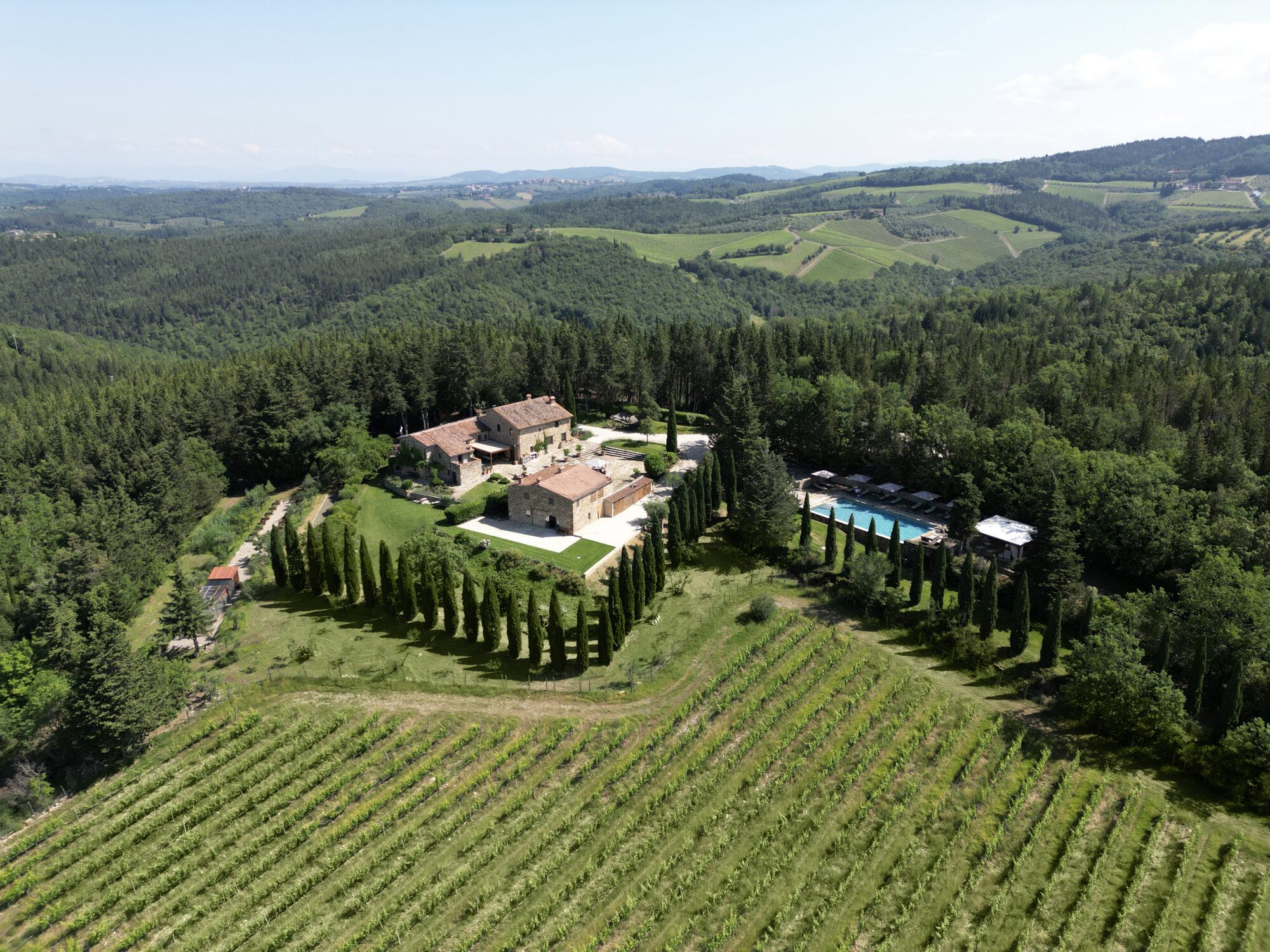
We at Villa Ardore can relate. For the first and, we hope, the last time, we closed the villa for the winter. After more than a year of planning, we began three major physical improvements to the property that would require too much disruption for us to be able to simultaneously provide guests with the luxe tranquility that has become our standard. So, last November, we closed our gates for the winter. But, just as nature is actually hard at work even when she seems to be taking her long winter nap, so were we preparing for the coming season.
As part of our commitment to preserve the Tuscan landscape and the nature that lives in it for future generations, we have installed an on-site solar power system, as well as a water catchment system so that we can use what would otherwise be runoff from the roof to irrigate the grounds instead of using precious potable water for that purpose. And, because we are concerned not only with the long-term health of the local environment but also its beauty, we have taken the extra effort to install the panels in such a way that they will be all but invisible except from the sky. In addition to these environmental upgrades, we have also refinished the area around the infinity pool with a new, lighter stone that will be cooler on one’s feet during the height of the summer sun.
A Winter of Doubt, and a Spring of Reward
But by far our biggest project has been the construction of a new, state-of-the-art Technogym fitness center. The gym will be equipped with every free weight and machine needed for full-body weight training as well as cardio, and will come with an AI trainer for guests who want to supplement their own self-guided workout (of course we can arrange private in-person sessions with a live trainer as well). A purpose-built patio between the gym and the pool will serve as a place for stretching, yoga, or pilates, with or without a private instructor. With breathtaking views over the vineyards that slope away from Villa Ardore toward the medieval towers of San Gimignano standing silent sentinel on the opposite hill, inspiration to exercise won’t be hard to find.
It’s hard to express how excited we are to finally be realizing these projects, which we had contemplated for a number of years. But I have to admit that there were times during the construction that I wondered if we were insane to try to do so much over a single winter. No less than four ancient stone retaining walls had to be taken apart so that posts holding up the structures on which the solar panels would be laid could be placed into foundations, trenches could be dug for electric wire conduits and water pipes for the catchment system, and underground technical rooms built. By December there were no less than three excavators on the property, digging up seemingly everything. When I visited the property in January, everything that needed to be dug had been dug, and everything that had to be moved or taken apart had been moved or taken apart. I despaired that it could ever be put together again, much less in time for our reopening this spring. In February, two weeks of torrential rains brought all work to a standstill, and it was yet another week before the muddy ground had firmed up enough for work to recommence. Talk about the bleak midwinter.
But when March came, things began to come together. The structures that will hold the solar panels were up, the retaining walls were meticulously rebuilt, stone by ancient stone, and the fitness center was taking shape. And all of a sudden this week, like the flowers springing joyously from ground and trees in recent days, the property is returning to its accustomed beauty, but with the fresh additions that we’ve used the winter to cultivate.
Rooted in Community, Committed to the Future
I’ve mentioned in previous Letters from Ardore how much a part of the local community Villa Ardore has become, and how embraced by this community we have been. And that has not only redounded to our benefit, but also to that of our guests, who are treated everywhere locally with the same trust and warmth that is extended to us. That’s a big part of what has inspired us to make the environmental improvements that we’ve made this year.
It’s also what inspired our decision this year to donate a percentage of each booking’s proceeds to the Tuscany Environment Foundation, an organization founded to help preserve and educate about this magnificent Tuscan countryside that we have been so fortunate to have inherited from those who came before us, and that we hope to leave as the inheritance of those who come after.
A Tuscan Springtime Culinary Tradition
One of the great pleasures of life in this agricultural community is the rhythm that the seasons lend to it: the enjoyment of just-picked fresh, flavorful vegetables in the summer, the vendemmia (grape harvest) and raccolta (olive harvest) in the fall, and the pruning of olive trees and training of grape vines in the later winter. And in the spring, for only a few weeks before Easter and a few weeks after, the arrival in local butcher shops of fresh spring lamb. Because sheep are so integral to the local cuisine—it is from their milk that pecorino cheese is made—lamb has also been an important part of the Tuscan diet for centuries. But lamb is available only in spring, and it is eagerly awaited. And it is, naturally, an important part of the traditional Easter meal.
And so, as Easter approaches, this month’s featured recipe is Agnello al Forno, oven-roasted lamb with potatoes and rosemary. One important note: with this recipe, planning ahead really pays off; letting the lamb marinate overnight makes a big difference in the depth of flavor.

Agnello al Forno
Ingredients:
For the Lamb:
2-3 lbs. (900g – 1.3kg) Bone-in leg of lamb
3 Tbsp. of extra virgin olive oil
4 cloves of garlic, chopped very fine
3 springs of fresh rosemary, finely chopped
1 Tbsp of fresh thyme
The juice of one lemon
½ cup (120 ml) of dry white wine
Salt and freshly ground pepper
For the potatoes
2 lbs. (900g) of lower-starch, waxy potatoes, like Yukon gold or new red potatoes
2 Tbsp. of extra virgin olive oil
1 tsp. of salt, or to taste
Freshly ground black pepper and 5 or 6 springs of fresh rosemary
Method:
To Marinate the Lamb:
To Prepare the Potatoes (to do just before roasting)
Preparing to Roast and Roasting
Slice and serve with the potatoes and crispy rosemary, along with your choice of spring vegetables.
To balance the natural fat of the lamb, we recommend a structured Chianti Classico Riserva.


This site is protected by reCAPTCHA and as such,
is subject to Google’s
Terms of Service and
Privacy Policy.
By subscribing, you agree with our Privacy Policy